Care Connection
Aged care transformation · consolidation and new setups

Bring the homes together. Keep the heart of each.

Grow by acquisition. Open something new. Every home you add brings its own rosters, records and registers. AI Workbench connects them on day one, then AI does the heavy lifting of moving your data and processes onto Care Connection, with your people approving every step.

Connect first. Migrate in waves. Legacy systems keep running until the new data is reconciled and signed off.

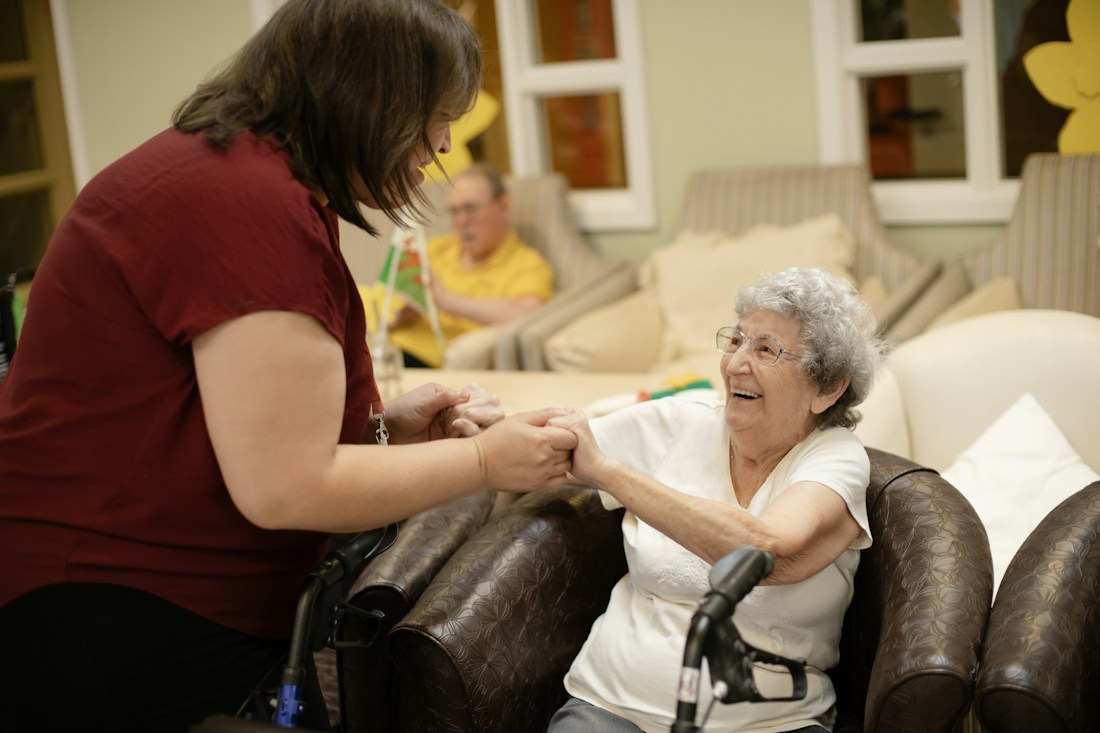
An older person and a care professional sharing a moment of connection
Different homes. One connected future.

Photo: Age Cymru / Unsplash. Illustrative, not a Care Connection customer.

For consolidating groupsFor new homes and providersAI-assisted. Human-approved.AI Workbench × Care Connection
The landscape has changed

The bar is rising. The way forward is a choice.

Australia's reforms put older people's rights, safer care and provider resilience at the centre. For smaller providers, meeting those expectations can make scale and collaboration more attractive.

01 / Quality and accountability

More to demonstrate. More to connect.

The Aged Care Act 2024 and the strengthened Quality Standards took effect on 1 November 2025. They bring detailed expectations for governance, clinical care and the experience of older people.

Read the quality requirements ↗
02 / Workforce and continuity

Care obligations. Every single day.

Residential care brings 24/7 registered nurse and care-minute obligations. Eligible homes can receive RN exemptions, and care-minute targets vary by home. Workforce planning has to work at the bedside and across the group.

Read the workforce obligations ↗
03 / Financial resilience

Stronger stewardship. A clearer group picture.

New financial and prudential standards commenced on 1 November 2025. They cover financial management, liquidity and investment, which raises the value of reliable financial oversight across a group.

Read the financial guidance ↗
Pressure to adapt. Freedom to choose.

Our assessment: shared governance, specialist capability and common systems can spread overheads, so partnerships, acquisitions or mergers look attractive to some smaller providers. That is a commercial inference, not evidence that government wants small homes absorbed into large groups.

The reforms impose no general requirement to merge. Staying independent, improving operations or sharing services are also viable, and government provides viability and capability support. For context, StewartBrown found 62% of surveyed homes operating at a loss in the nine months to March 2026, up from 49% a year earlier (survey; a benchmark, not a Care Connection result).

Two paths. One connected ambition.

Growth should not multiply your systems problem.

Bring inherited systems into view, or start with a coherent foundation. Choose your starting point and move the slider to see how the group view grows.

Interactive concept · illustrative only
Connect before you replace

Many homes. One operating picture.

Start by understanding the systems you inherit. Agree common definitions, surface differences and plan the transition around the realities of each home.

A shared view of clinical, workforce, risk and governance information, with migration agreed function by function.

Homes connecting to one group view An illustrative diagram. Change the number of homes to see the shared operating model grow. Care Connection One group view PEOPLE · CARE · GOVERNANCE

Inherited systems → connected view → approved migration

01 · Consolidating

Unite the operation. Respect the local knowledge.

Bring homes and organisations together without treating every inherited process as something to copy.

  • Read every inherited system into one group view of risk, workforce and compliance.
  • Compare homes on the same definitions, not each one's own reports.
  • Review differing policies and workflows side by side, and choose one way.
  • Reconcile and approve each migration before retiring a legacy tool.

Integration value shows up before the migration is finished.

02 · Starting new

Build the foundation. Leave room to grow.

Design clinical, workforce and governance workflows together, before fragmentation becomes the default.

  • Set up registers, care plans, policies and escalation paths against the Standards from the start.
  • Roster with intelligence from the first template, not after the first agency bill.
  • One record across clinical, workforce and governance from the first resident.
  • Add homes later without adding systems.

Readiness is designed in, not retrofitted.

A visual explanation of the proposed approach, not a live product screen, readiness assessment or forecast. Integration scope and feasibility are assessed with each provider.

AI does the heavy lifting. People lead.

Move the data. Rethink the process. Keep people in control.

Migration is where transformation usually stalls: months of spreadsheet mapping, and processes copied across unchanged. AI Workbench, the environment behind Care Connection, changes both halves of the job.

  1. Make the differences visible. AI reads each system's exports, proposes how every field maps, matches residents, staff and homes across systems, and flags conflicts and reconciliation gaps for a person to resolve.
  2. Design the way forward together. AI reads your procedures, forms and policies, maps them to the Standards, and shows where two organisations do the same job differently, so you can choose one way.
  3. Earn the cut-over. No record is changed in a source system. Legacy applications stay available until reconciliation and transition arrangements are signed off.

Payroll and finance remain in your existing systems. Access, privacy, security, retention and integration arrangements are agreed before any data connection.

The end state

A smaller, AI-driven application set.

Fewer systems to licence, train and reconcile, and one place where the group's risk, workforce and care picture comes together.

FunctionWhat you typically inheritWhere it lands
Rostering and workforceOne or more rostering systems per acquired group, each with its own templates and award setupRostering intelligence across every home, then a single roster model
Clinical records and care plansSeparate care-notes and assessment tools, often partly on paperAssessments, versioned care plans and care notes in one record
Incidents and SIRSSpreadsheets and local registers, reported differently by each homeOne incident register with SIRS context and pattern detection
Compliance and auditEvidence assembled by hand before each auditStandards mapping, gap analysis and audit rehearsal on live data
Policies and proceduresA library per organisation, with conflicting versions after a mergerOne versioned library, mapped to the Standards
Payroll and financeStays in your payroll and finance systemsRead and reconciled against rosters and care minutes, not replaced
AI Workbench

Connect, build and migrate

The AI development environment behind Care Connection. It connects to the systems you already run, builds what your group needs that does not exist yet, and carries out the data and process migration.

  • Integrations with your existing systems.
  • New modules built in weeks, not release cycles.
  • Migration mapping, matching and reconciliation.
Care Connection

Run the group

The AI-driven platform your homes run on: clinical, workforce, risk and governance in one connected view, with AI highlighting what needs attention and the evidence one click away.

  • Executive and board views across every home.
  • Daily care operations for staff on the floor.
  • Audit-ready evidence, current by default.
A program in considered waves

Every stage should give you something useful.

Start with visibility. Progress with evidence. Choose a stage to explore a possible transformation journey.

First 90 days · indicative planning horizon

See what you are bringing together.

Map homes, systems, data ownership and the processes that matter most. Agree access, common definitions and a staged migration plan before introducing change.

A tangible outcome: an agreed systems map, a first group view where feasible, and a prioritised transition plan.

Illustrative program design, not a delivery commitment. Timing, integrations, validation and outcomes depend on scope and are agreed for each program.

An invitation to shape what comes next

Be one of the first. Help make it better.

We are looking for a small number of providers, bringing homes together or starting new, to shape a practical transformation program around real operational needs.

Explore a founding partnership
Talk to us

What are you bringing together, or starting?

A new home. An acquisition. A group that has outgrown its systems. Tell us where you are and we will map your homes and systems with you and show what a first 90 days could look like. No commitment, and nothing touches your systems without agreement.

  • Consolidating groups and new providers welcome.
  • Legacy systems keep running until you sign off.
  • Please keep resident and staff information out of your enquiry.

Start the conversation

We reply within two business days.

We use your details only to reply to this enquiry. No newsletters. See our privacy policy.

Thanks — we'll be in touch

We reply within two business days.

Common questions

Straight answers.

Does government policy require smaller providers to merge?

No general merger requirement is established by the reforms discussed here. Quality, workforce and financial obligations can make shared capability or scale more attractive to some providers. That does not establish a policy to eliminate small providers, and consolidation is not a substitute for meeting obligations.

Do we need to replace every system at once?

No. The approach is phased: connect and understand first, then migrate agreed functions or homes in waves. Legacy applications are retired only after reconciliation and approval. Payroll and finance systems stay in place.

Will AI make clinical, staffing or funding decisions?

No. Care Connection prepares information and proposed changes for people to review. People keep clinical, staffing, payroll, funding and migration decisions, under your own governance and approval arrangements.

Have you done this before?

Not yet at group scale, and we say so. The risk, compliance, clinical and rostering intelligence modules are built and working. We are looking for a small number of providers to shape the first programs with us.

Policy sources, interpretation and imagery
  1. My Aged Care: Aged Care Quality Standards. Commencement, scope and transition to assessment against the strengthened standards. Published assessment results for existing homes may continue to reflect the previous standards until reassessment.
  2. Aged Care Quality and Safety Commission: RN and care-minute obligations. Home-specific targets and RN requirements; relevant exemptions apply.
  3. Commission: Financial and Prudential Standards guidance and Aged Care Financial and Prudential Standards 2025. Scope differs between standards and provider circumstances.
  4. Department of Health, Disability and Ageing: financial viability and capability. The stated policy emphasis is continuity, quality, transparency and viability, with support to help providers improve.
  5. StewartBrown Aged Care Financial Performance Survey, nine months to March 2026. Survey benchmark.
  6. Hero photograph by Age Cymru under the Unsplash License. Illustrative only; it does not depict a Care Connection customer or imply endorsement.

Policy sources reviewed 6 November 2026. Consolidation implications are editorial analysis, not stated government intent or legal advice. Confirm current obligations with the regulator. Migration approaches and timing are agreed per program; Care Connection does not guarantee savings, audit outcomes, compliance or migration timeframes.